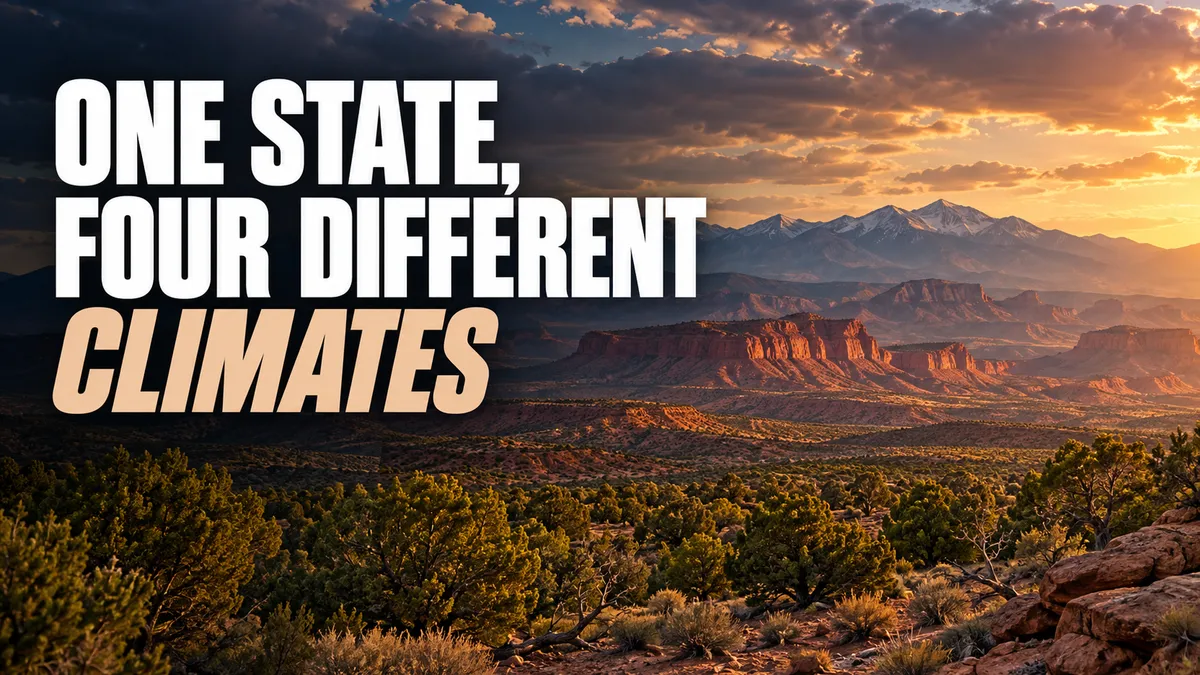
THE SAME STATE, FIVE HOURS APART, TWO DIFFERENT CLIMATES: What Elevation Actually Changes About Buying Arizona Land
Arizona can put a 115-degree summer day and a 240-inch winter snow season in the same state, sometimes a few hours' drive apart. If you're comparing parcels in different counties without thinking about elevation, you're not really comparing the same kind of land at all, you're comparing climates that happen to share a state line. It's an easy thing to overlook when you're scrolling listings by price and acreage, but it quietly shapes almost everything else: what you'd actually build, when you'd build it, and what day-to-day life on that parcel looks like twelve months a year, not just on the sunny afternoon a listing photo was taken.
The Four Climate Bands Arizona Actually Has
Arizona breaks down into roughly four elevation bands, and each one behaves like a different place to own land. Low desert, below about 2,500 feet, includes Phoenix, Yuma, and most of La Paz County, with summer highs regularly hitting 105 to 115 degrees and essentially no snow. High desert, roughly 2,500 to 4,500 feet, covers Tucson and most of Cochise County, with summer highs in the 90s to low 100s, mild winters, and occasional frost. Transitional foothill country, around 4,000 to 5,500 feet, includes Prescott and Sedona, with 80s-to-90s summers and light, moderate winter snow. And mountain four-season country, 5,000 to 7,500 feet and higher, covers Flagstaff, the White Mountains, and most of Navajo and Apache County, with 70s-to-80s summers and real winters, teens or single digits overnight, and serious seasonal snow.
What a USDA Hardiness Zone Actually Tells a Land Buyer
You'll sometimes see a USDA plant hardiness zone listed for an area, and it's worth knowing what that number actually means beyond gardening. The zone is based on the average coldest winter temperature a location sees, and Arizona spans an unusually wide range for one state, from zone 5b in parts of Coconino and Apache County, where winter lows can hit negative 15 degrees, to zone 10a and 10b along the Colorado River and in Yuma, where winter lows barely dip below 35. That same number that tells you what a fruit tree can survive also tells you, roughly, how hard the ground freezes, how much insulation and freeze protection a future well line or septic system would need, and how long your outdoor building season actually runs. It's a genuinely useful shortcut precisely because it's standardized: the same zone number means roughly the same winter cold anywhere in the country, so it travels better than a vague description like "mild winters" from one listing to the next.
Why Mohave County Alone Proves the Point
Mohave County is the clearest single example of why "Arizona land" isn't one climate. Its hardiness zones run from 6b all the way to 10a, nearly the full range the entire state covers. Lake Havasu City and Bullhead City, down along the Colorado River, sit at zone 9b to 10a, hot low-desert country with mild winters. Kingman, at a higher elevation inland, sits at zone 8a to 9a, noticeably cooler. And land up on the county's higher plateau can run as cold as zone 6b. Two parcels with a Mohave County address can describe genuinely different climates, which is exactly why the county alone, not just the state, isn't enough information to picture what a specific lot will feel like in January or July.
The Cold End: Navajo and Apache County's Mountain Country
Navajo County runs zones 6a to 8a and Apache County runs 5b to 7b, both anchored by the White Mountains and the high plateau country around Show Low and Pinetop-Lakeside. This is real winter: Flagstaff-area totals regularly top 100 inches of snow a year, and nearby Greer can see close to 240 inches in a heavy season. If you're looking at land in this band, winter access, freeze depth for any future well or septic line, and a genuinely shorter building season all deserve real weight in your planning, not an afterthought once you're already under contract.
The Hot End: Low Desert Counties Like La Paz
La Paz County sits in the low desert band, zones 8 through 10, where summer highs of 105 to 115 degrees are normal and snow is a non-event. The upside is a long, mild outdoor season for most of the year, people are out working land in low desert country in December when mountain parcels are under snow. The tradeoff is the opposite problem: serious summer heat planning, real water-use considerations, and construction materials and timing that account for extreme heat rather than extreme cold.
Cochise County's Middle Ground
Cochise County, where the San Simon Valley sits, runs zones 6b to 9a, high desert territory with Sierra Vista as a reasonable reference point. Summers run hot, 90s to low 100s, but with real winter nights and occasional frost, a meaningfully different experience than true low desert. It's a reasonable illustration of why "high desert" isn't just "a little milder than low desert," it has its own distinct rhythm, monsoon season included.
What This Means Practically Before You Buy
A few concrete questions are worth asking about any specific parcel, not just the county it sits in:
What's the actual elevation and hardiness zone for this lot, not just the county average, since a single county can span several zones.
How does winter affect this specific site, in terms of freeze depth for a future well or septic line, and road access if snow is a realistic possibility.
How does summer affect it, in terms of water needs, construction timing, and whether the heat changes what building materials actually make sense.
How long is the realistic outdoor building season for that elevation band, since it's genuinely longer in low desert country and genuinely shorter in the mountains.
The Bottom Line
Arizona isn't one climate wearing one state's name, it's at least four, and sometimes more than one inside a single county. Elevation changes what you're actually buying as much as acreage or price does, and it's worth asking about before you fall in love with a parcel based on a photo that could have been taken in any season. The same $15,000 price tag can buy a lot where you're building through a mild December or a lot where you're planning around a genuine winter, and neither one is the wrong choice, they're just different choices that deserve to be made on purpose.