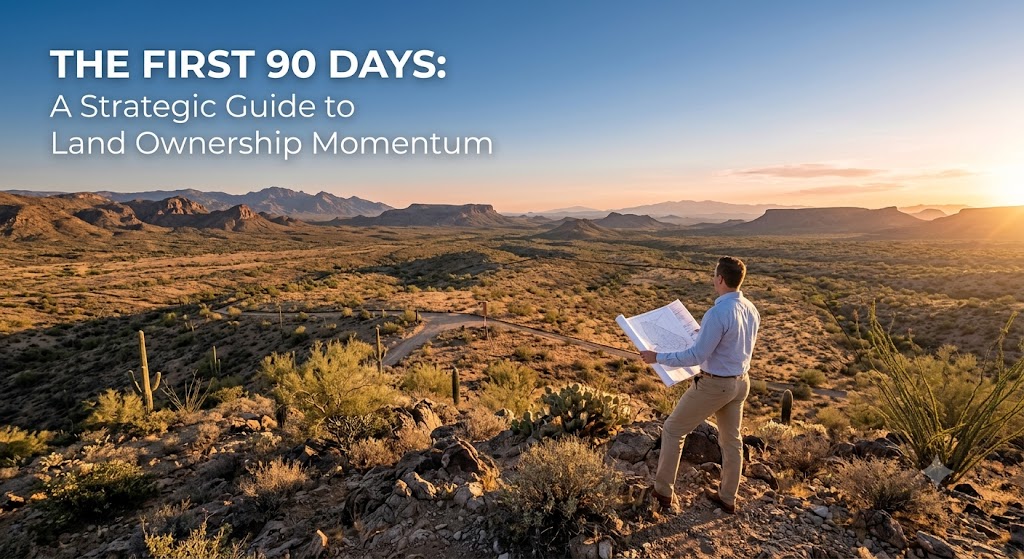
THE FIRST 90 DAYS: YOUR ROADMAP TO LAND OWNERSHIP SUCCESS
You just closed on your Arizona land. Congratulations. Now what?
This is the part nobody prepares you for. You have the deed. You own the property. But ownership isn't just about having the land—it's about understanding what you have and what comes next.
The first 90 days matter more than you think.
Why the First 90 Days Are Critical
Most new land owners make decisions in the first three months that affect the next decade of ownership. Some of those decisions are smart. Some cost thousands of dollars to fix later.
The difference between the smart owners and the expensive-mistake owners? The smart ones have a plan for the first 90 days.
Day 1-7: Secure Your Foundation
Walk the property yourself. Don't just look at the aerial photo. Stand on the land. Walk the perimeter. Get a feel for the actual terrain, vegetation, and conditions. You'll notice things that photos and documents never show you.
Locate the property corners. This is non-negotiable. If you don't know where your property ends and someone else's begins, you can't make smart decisions. Hire a surveyor if needed. This costs $300-500 and saves you thousands in future disputes.
Meet your neighbors. Seriously. Walk over and introduce yourself. Learn what they know about the land, the area, water access, and any ongoing issues. Neighbors will tell you things that formal records won't.
Document everything. Take photos from different angles. Video walk-throughs. Make a detailed inventory of what exists on the property. This becomes your baseline for insurance, future improvements, and proof of condition.
Day 8-30: Understand What You Own
Get a full property assessment. You have the title, but do you understand the zoning? The easements? The utilities? The water rights? Have a real estate attorney or property consultant review your documents. This costs $200-500 and clarifies what you can and cannot do with your land.
Check utility infrastructure. Is there power nearby? Water access? Septic considerations? Even if you're not building immediately, understanding the utility situation shapes your long-term plans. Call the county. Call the utilities. Get real information.
Understand your tax obligations. As a new owner, your property taxes may change. Zoning may affect property taxes differently. Understand your new annual costs. This prevents surprises when the tax bill arrives.
Research your area's development plans. County planning offices have information about future roads, subdivisions, or development in your area. What's planned for the next 5-10 years? This affects appreciation and future use.
Day 31-60: Plan Your Vision
Decide your ownership goal. Are you holding for appreciation? Building eventually? Using it as a seasonal retreat? Running a business? Your answer determines everything that comes next. Different goals require different management strategies.
If building is in your future: Get preliminary quotes from contractors. Understand site prep costs. Understand utility hookup costs. Know what development would actually cost before you assume it's affordable.
If you're holding for appreciation: Understand your local market. What's driving land values in your area? Is it population growth? Corporate buying? Development? Know why your land is appreciating so you can make smart decisions about holding vs. selling.
If you're using it for lifestyle: Plan access improvements, clearing, maintenance. Decide if you need structures. Understand seasonal conditions. Arizona summers are hot—think about shade and water.
Document your vision in writing. Not just in your head. Write down your actual plans for this property. Five-year plan. Ten-year plan. Exit strategy. This keeps you focused and prevents impulse decisions.
Day 61-90: Protect Your Asset
Get proper insurance. Land insurance exists. Get it. Make sure your coverage matches your property's actual value and your plans for it.
Establish property maintenance baseline. What does this property need to stay valuable? Regular clearing? Fence maintenance? Weed control? Set up a maintenance schedule now before you forget.
Set up your financial tracking. Separate account for property expenses. Track everything. Mortgage payments, maintenance, taxes, improvements. This becomes critical for tax purposes and for tracking your actual return.
Make your first improvement decision. It doesn't have to be big. Maybe it's clearing a view line. Maybe it's establishing access. Maybe it's planting native vegetation. Do something intentional with the land in the first 90 days. This shifts your mindset from "I own land" to "I'm actively improving my asset."
Make a 1-year plan. What will you accomplish in year one? What's the priority? What will you defer? Having a plan prevents analysis paralysis.
What Most Owners Miss
Here's what separates successful land owners from ones who regret their purchase:
Successful owners treat the first 90 days as critical setup time. They ask questions. They walk the property repeatedly. They understand what they own before they make big decisions.
Unsuccessful owners close on the land and then... disappear. They visit occasionally. They don't really understand what they have. When something goes wrong or an opportunity appears, they're unprepared.
The first 90 days is your window to transform from "someone who bought land" into "someone who owns land strategically."
Your First 90 Days Checklist
Walk the property thoroughly
Locate property corners
Meet your neighbors
Document everything with photos/video
Get property assessment from attorney
Check utility infrastructure
Understand tax obligations
Research area development plans
Define your ownership goal
Get contractor quotes (if building)
Research local market drivers
Secure proper insurance
Set up maintenance baseline
Create financial tracking system
Make your first intentional improvement
Create a 1-year plan
The Real Outcome
After 90 days of intentional ownership, you won't just have land. You'll have clarity. You'll understand what you own. You'll know what comes next. You'll have made smart decisions instead of expensive mistakes.
Most importantly, you'll have stopped being a spectator in your own ownership and started being an active participant.
That's when land ownership transforms from an asset into a strategy.
